Right To Not Wear Pants

Got your attention?

I’ve seen so many discrimination cases against Sikhs lately, that this one caught me by surprise. I wonder what precedent it might set for discrimination cases with Sikhs.

Justice, Metro Settle Religious Discrimination Suit
Associated Press Tuesday, February 3, 2009; 3:27 AM
http://www.washingtonpost.com/wp-dyn/content/article/2009/02/03/AR2009020302147.html

The Justice Department has settled a lawsuit accusing Washington’s transit agency of religious discrimination. The complaint filed in federal court accused Metro of discriminating against a woman of the Apostolic Pentecostal faith because she was unable to comply with Metro’s uniform policy.

Gloria Jones said she wasn’t hired as a bus driver because her religious beliefs prohibit her from wearing pants, which are part of the uniform.

The Justice Department announced Tuesday that Metro has agreed to pay more than $47,000 to Jones and $2,500 each to two others who say Metro didn’t accommodate their beliefs.
Metro also must implement a policy to reasonably accommodate employees’ religious practices and train its supervisors on religious discrimination.

The agreement still must be approved by the court.


Music

Along the same theme as my last post, I heard a This American Life program a few months back called Music Lessons.” It’s a mildly amusing story that perhaps musicians can appreciate more than I. However, in Act 3, about 45 minutes in to the program – a woman reflects on a recent experience she had at her church and how music created a “miracle.” Her poetic account of this experience is brilliant.

When I originally heard this, I immediately thought about Keertan, and the profound impact it has had on me and many others. Gurbani is not simply words on a page, but Guru Sahib specifically prescribed a raag to each Shabad – to convey it’s mood, to create that feeling and emotion he felt when writing it. How beautiful!

After listening to this, I thought about those rare moments at a Keertan Darbar or Samagam where I felt a sense of connection with the Sangat and how Keertan created that connection. It can be powerful!

I’m curious to hear what others think of the program and if anyone else has had a similar “Sangat Moment.”


Amandla!

Years ago, I watched this beautiful documentary called Amandla (Xhosa word for “power”)

It chronicles the struggle of the Black South Africans when the apartheid government came to power in 1948. It also covers the decades of increasing violence and repression, then finally “victory” in 1994 when Nelson Mandela became South Africa’s first democratically chosen president.

I’ve always been fascinated with the Black South African movement against apartheid and have read, listened, and watched much about it. What was so unique about this film was it focused on the music of the movement, and how the power of song was used to communicate, motivate, console, unite and, ultimately, beget change.

I really connected with this film as it made me think about Shabad Keertan and in particular – Vaars, and how it may have been used to motivate and inspire the Khalsa during battle. I would strongly recommend this documentary for a film discussion at any Gurmat camp or retreat. If anyone has seen it, I would love to hear your review!


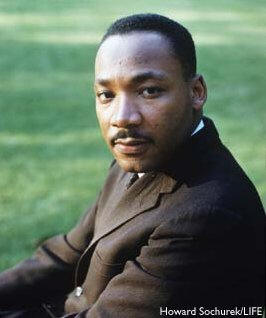
Remembering Dr. King

Through the years, I’ve had many debates with Sikh friends over Dr. King’s non-violent philosophy, but regardless of what one might feel about his beliefs, there are several apects about his life and work that are of note.

He was an amazing orator and had a remarkable ability to articulate the struggle, and inspire people to action. He was not simply a demagogue or a symbol of the movement, but lived on the front lines. He participated at the grass-roots level, whether it was marching in Selma or courting arrest in Birmingham. He was not a “self-professed” leader, but he worked…tirelessly…and was the first to take a risk or make a sacrifice when called upon. And through this, he earned the respect of his peers and became a leader. To quote a line from my favorite movie Braveheart, “Men don’t follow titles, they follow courage.”

What I admire most about Dr. King was his vision – and his ability to pour himself completely in to a movement that he knew he would never see the outcome of. But the foundation he laid was so strong, it was able to carry on without him. This was the genius of Dr. King. And over time, so much of his “dream” has been realized, even in our present day.

Perhaps this is something Sikh leaders and “leaders-to-be” can reflect upon.
What can we learn from Dr. King’s life and work for the Sikh Nation to realize it’s full potential?

His famous “I Have a Dream” speech will likely be played on television and radio stations all day throughout the country. I’ve heard it in its entirety several times and it still gives me goose bumps. But another one that I find particularly powerful was his famous “Mountaintop” speech. Amidst several death threats, he delivered this on April 3, 1968 at the Mason Temple in Memphis, Tennessee. Here is a video of his closing words, which would turn out to be his last public speech, as he was assassinated hours later.


Saroop

Place your hand upon my head, my Friend
That I may be an embodiment of your wisdom
That I may epitomize your strength
That I may personify your courage
That I may represent your virtues
That I may be an example of your character
That I may be an expression of your grace
That I may be an incarnation of your truth
That I may be a manifestation of your love

Floetry

An article of mine recently published on sikhchic under the title, The Mane of a Lion. I prefer my original title…

Floetry
by Rubin Paul Singh

While on a road trip this past summer, my seven-year-old niece asked me a question that caught me off guard. She asked:

Mama ji, why don’t you tie your beard?

To be honest, it wasn’t something I had thought much about, so it wasn’t easy to come up with a quick answer, let alone one that would satisfy an inquiring seven-year-old.
With little thought, I quickly responded: “Because I want to look like my heroes.” She didn’t ask any more questions. The answer seemed to satisfy her, but I wasn’t sure if it satisfied me; perhaps it needed a little more thought.

Like many young boys born and raised in the U.S., my bedroom reflected all of my interests, and its walls paid homage to many of my heroes. I was an avid sports fan – so, the likes of Michael Jordan, Walter Payton and John Riggins adorned a wall.

But as the mid-80’s approached, my interests shifted. Unrest was growing in Punjab and I became inspired to learn more about my faith and my history.

From the moment I began delving into our rich past, I was captivated! The more I read, the more fascinated I was, not only by the Gurus and their lives, but also by the brave generals who came after the period of the Gurus. They fought intense battles against injustice and for the sovereignty of the Khalsa Panth. Soon enough, the pictures of my sports heroes came down, and images of Banda Singh Bahadur, Baba Deep Singh, and Maharaja Ranjit Singh made their way onto my walls. My room became a shrine to Sikh leaders and battlefield heroes, like Hari Singh Nalwa, Jassa Singh Ahluwalia, and Akali Phula Singh.

Given the political climate at the time and my study of the Sikh struggle of the 1980’s, the likes of modern-day generals such as Baba Jarnail Singh, Bhai Amrik Singh, and General Shubeg Singh made their way to my wall.

As I got older and broadened my learning, pictures of Giani Ditt Singh, Prof. Puran Singh, and Bhai Vir Singh were also proudly displayed. Often times, I would daydream gazing at my wall, and I would think of all that these charismatic leaders, brave soldiers and amazing personalities had in common – their sheer courage, their ability to overcome adversity, their commitment to their faith, and their passion for Sikhi. But at a quick glance, you would notice the one thing that stood out automatically – they all had long, flowing beards!

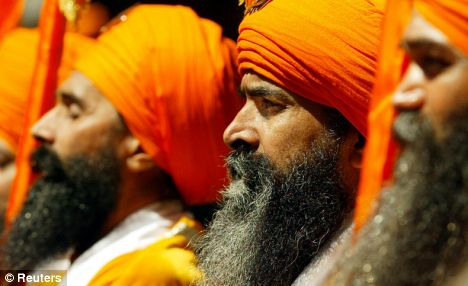
Since then, I have found the “khullih-dharrih” look to be both regal and impressive. I know you cannot judge a book by its cover and “baana” alone does not define your character, but at a completely superficial level, I find it beautiful!

The flowing beard is like poetry to me … or, as I call it, “Floetry.”

Perhaps because it reminds me of what my Gurus must have looked like, and of their personality and their character, and their ability to re-mould society.

Whenever I see someone similar at the gurdwara, at a nagar kirtan, in downtown, or at the mall, I feel a connection. I am overwhelmed – and I find a deeper appreciation for my own kakaars.
People may have many theories as to why Guru Sahib gifted this to us, but to me, I believe it is to give me just this feeling and emotion. I remember years ago, while on a business trip in New Zealand, stopped at a traffic light, I looked over and spotted another driver with a beautiful kesri dastaar and a khullah dharrah! I don’t know what came over me – but it brought tears to my eyes. There I was, far from home, far from my sangat – but this image alone, connected me to my Gurus, to my heroes, and to my history.

Although I have chosen to let my beard flow at Sikh functions for years, I finally decided to stop tying it at work, as well. This may seem like a small deal to most, but regardless of my admiration of the khullih dharrih look, it was still something I was conscious about for myself. But with my wife’s encouragement, I was able to “take the plunge” and can say that I’ve been gel- and hairspray-free for over a year.

Thank God!

It’s been an interesting transition. When walking through the mall or in the city, sure, I do get a few extra stares, and maybe a few more ignorant comments than before, but for every negative, I receive just as many positive comments. Sometimes children will come up to me and tell me they like my beard. Often times the “follicle-challenged” would explain how hard they’ve tried to grow a beard like mine and failed. And I especially like it when fellow bearded-men smile and nod with a look of camaraderie and brotherhood, as though we are part of some secret society.
It’s pretty amusing. I never had these interactions before.

So, when I think back on when my niece asked me why I didn’t tie my beard, I wish I could say there was something philosophical or spiritual to it, but the truth is, there isn’t. Perhaps it is the kid in me who just wants to look like his heroes, or it is the adult in me who is trying to live up to what his heroes stood for, or maybe just the Sikh in me, who loves his faith, and wants to shout it out from a mountaintop.

January 2, 2009


Low Hanging Fruit

In my study of Sikh History, there are certain events I’m marveled by. More than any other, I’ve been fascinated with how the Guru’s challenged the caste ideology. Whether it was young Nanak at the age of 7 refusing to wear the Janeoo (scared thread) or the establishment of Langar, where people of all castes and creeds sat together and shared a common meal – these ideas challenged the status quo and re-molded society. Perhaps these were the precursor to Guru Gobind Singh forming the Khalsa, a caste-less brother/sisterhood, where regardless of what background you came from, by receiving the Guru’s amrit, you were elevated to the family of the Guru.

How amazing?

Anyone who understands how the caste system influenced all aspects of society for thousands of years, can appreciate how significant a milestone the establishment of the Khalsa was. And how fitting, on that day in 1699, Sikhs were given their uniform, and were given the name Singh and Kaur as they began their lives on the Guru’s path.

I believe our tenth Master gifted us the surname of “Singh’ and “Kaur” to erase any last trace of what was once a caste-based society. I often wonder…if Guru Sahib gave us this Hukam of using Singh and Kaur at the same time and on the same day as he did our Kakaars, then why do we value this Hukam any less? Guru Sahib, through his bold stances – in words and in actions, released us from the shackles of slavery, yet today, we choose to stay as slaves willingly. We struggle so hard to find our identity and cling on to our caste, family, clan, or tribal heritage. But isn’t this why the Khalsa was formed? To break down those barriers, to lose “ourselves” and become part of the whole? Personally, I take great pride in being a “Singh” and losing my “self” within the Khalsa Panth. I feel proud knowing that any of my accomplishments are shared with all “Singhs” and exercise caution knowing that any negative actions may adversely affect other “Singhs.”

When getting married, my wife and I consciously chose to keep our names separate as Singh and Kaur. Many complain that the process to get a last name changed is very difficult, but I know there are many out there who have taken this step, and perhaps some can comment on their experience. It’s especially easy for women when they get married, as name changes are quite common. Some complain that a married couple having different last names is inconvenient – not at all. Besides…this is America, I’m sure women taking their husband’s name will be a “thing of the past” sooner than you think.

I take great pride in my wife and daughter being “Kaurs” and can’t wait to explain to my little Kaur why she and I have different last names and this great gift the Guru has given us. Aside from occasionally being called “Mr. Kaur” at some of my daughter’s functions (which we all get a little giggle out of), there has been no inconvenience at all. Personally, I get tired of having conversations with non-Sikhs, having to explain what Sikhi is about, and then explain what Sikhs “really do.” There are many issues like this, but to me, keeping the name of Singh and Kaur seems like “low hanging fruit.”


Heretics

While living in Chicago, I was a loyal listener to Chicago Public Radio’s “This American Life.” No matter how many different types of media are out there, I still find the radio documentary to be a powerful medium. After leaving Chicago, I made a point to subscribe to their weekly podcast. A few weeks ago, I heard this fascinating story about Reverend Carlton Pearson, a renowned evangelical pastor in Tulsa, Oklahoma. This story talks about his rise in the evangelical arena, and his eventual fall because of his doubts in the belief of hell. He wondered if a loving God would really condemn most of the human race to burn and writhe in the fire of Hell for eternity. He started preaching the theology of “inclusion-ism” which believed God was all-loving, regardless of what path he or she chose. He was ultimately declared a heretic by the church. Take a listen…I’d be curious to hear what others think
http://www.thisamericanlife.org/Radio_Episode.aspx?sched=1273


Living The Life

Waheguru Ji Ka Khalsa
Waheguru Ji Ki Fateh!!

This year I had the opportunity to visit a few Gurmat camps and engage in a lot of interesting discussion with Sikh Youth from all over the country. It was a nostalgic experience for me to re-visit the questions and issues facing Sikh youth today as they enter their formative years and become more independent in their thinking and actions. Coincidentally, while looking through some archives, I came across an email I received many years ago. This email was special to me because it sparked a lot of questions, conversations, debates, and discussion with my Sangat, all of which helped me formulate many of the views I have today. Looking back, I’ve come to cherish those moments with my Sangat, as it forced me to introspect and challenge myself. I look forward to more opportunities as I continue on this journey.This email was a post on a listserve, responding to a specific question of “When is it okay to remove one of your Kakkars?” An answer is provided at the end, but the journey of getting to his answer is much like the journey of a Sikh…experiential. Anyhow, I hope you enjoy it.
And please note: This was written about 10 years ago by someone closer to my age, hence the reference to “Star Trek” 🙂
Akaal Sahai,
Rubin Paul Singh
——————–
I received Amrit, not because I understood the Sikh way, but because I wanted to understand the Sikh way. I realized that true understanding of Sikhi can come only if I submit to the way of Satguru Nanak. After having spent significant time reading and listening to what worldly gurus—scholars and academics of Sikhism—had to say about Sikhi, I realized the only way to truly sikh (learn), and change myself was to become a Sikh. This meant that I had to make a commitment to the Guru and receive Amrit. Amrit, for me, was the first step and a product only of my desire to change. I was reluctant for a long time because I knew that this commitment would require me to change how I live, and I really did not want to give up my lifestyle. Frankly, there have been days since I made this commitment when I have second guessed the choice I made. What I have also realized that following the Rehat, which on many a day has been a chore and quite ritualistic, has helped me to submit some part of my will. I don’t know why Guru Sahib asked me to follow the discipline of the Panth. I don’t know why I must wear articles that at times seem antiquated and meaningless. I don’t know why Satguru asked me to arise before dawn and repeat prayers that more often than not mean nothing to me—even though I know much of the literal meaning. I only know that I would like to grow, that I would like to love, and that I would like to live like Satguru Nanak. And if I have to follow a discipline that does not agree with my limited intelligence, I must will myself to follow it, especially if I am serious about emulating Guru Nanak. In this struggle to follow the Guru’s Rehat, I fail everyday – but I continue the struggle. Some days are more disheartening than others. Some days I can say that following the discipline has helped me change a little by helping me get a little more control over my anger, be a little more cognizant of my arrogance, and be a little more aware when I am being crude. Some days I feel that I have bridged a small part of the vast gap between me and Bhai Lehna, the ideal Sikh who grew to become the image of Satguru Nanak. There are moments when I find my Kesh not as meaningless symbol, but as the Guru’s Kesh. On occasion I find my Kirpan not as a symbol, but as the Guru’s gift of Kirpa (grace). On rare blissful days I see my Kanga as a mark of my Guru’s love. In every ten times I rattle through my Nitnem, may be once I connect with a line. My eyes well up with joy and my ego boundaries dissolve, and I get a glimpse of the unspeakable. So I tell myself when I doubt the commitment I made the day I received Amrit not to focus on the do’s and don’ts of the discipline, but on the love I seek to develop for the Guru. If my focus is love for the Guru, then the problems I have wearing my Kesh or my Kirpan, the agony I go through to get up to do my Nitnem are all well worth it. That I don’t follow the Rehat completely is a measure of my wishy-washy love for the Guru. At 10:30 pm when I have a choice to go to sleep and wake up at Amrit Vela to do simran, or watch Star Trek, and I choose to watch TV, I am effectively choosing Captain Kirk over Guru Nanak. Clearly even though I may claim to love Guru Nanak, my actions and my lack of willingness to change, show that I love Captain Kirk more (yuck! but true). The commitment that Amrit asks of me is much more that just wearing 5 K’s and doing Nitnem. It asks me to will myself to change; to lose my anger, my greed, my attachment to Maya, my arrogance; and that is far more difficult. If I cannot even follow the easy part of the discipline, which is largely related to my physical self, how can I even dream of conquering my spiritual self? If I cannot even submit when it comes to wearing my Kacchera and Kirpan, how can I possibly submit to wearing humility and compassion? The question that Guru Nanak asks me: “Are you ready to love?” My answer is Yes, but do my actions say that too? Following the Rehat is just one small measure of demonstrating a willingness to give up my way of thinking. The do’s and don’ts of the discipline are not important. The question is love. Some GurSikhs are unwilling to part with there 5 K’s even for a moment. Others make some exceptions. The Guru’s Rehat, as articulated by the Guru Panth, says nothing about this. So every Sikh has to look within and answer to their conscience through which the Guru speaks to a Sikh. For one Sikh taking off the Kirpan even for a moment is troubling, for another it is okay if under certain circumstances it is removed. As long as the Kirpan and the other K’s are worn and respected, each Sikh must choose for her/himself as to what is acceptable. While I am not an avid sports person, when I swim or play sports I do remove my Kirpan, but I put it back on (as soon as I am done). I am comfortable with this. I have been chastised by some Sikhs that I am too fanatical for wearing a Kirpan and by others for being to lax in following the Guru’s discipline. I listen to both; and try not to react to either. My conscience is clear. I respect the choice some GurSikhs make to never remove their 5 Ks, but don’t feel that the Guru demands this of me. At the same time, I am not comfortable with wearing mock versions of the 5 Ks around my neck. My Guru speaks to me through my conscience. My conscience is molded by my values. My values change as I reflect on Gurbani, Sikh History, the Rehat, and the view of my sangat and spirituality.
Hoping to be a constant “changer”…hoping to be a Sikh.


A Singh In Cheese Country

From http://www.sikhcoalition.org//ed_vol_essay.asp

A Singh in Cheese Country
By Rubin Paul Singh

Usually, I stay away from “Interfaith” gatherings and speaking at “Cultural Day” seminars. I’m way too cynical for these warm and fuzzy “we are all one” love-fests. However, after Balbir Singh was murdered in a post 9/11 hate crime, I had a change of heart, and have since made every attempt to take advantage these opportunities.

Last week on behalf of the Sikh Coalition, I met with the students of Hamilton High School in Sussex, Wisconsin, a small Milwaukee suburb. It was an eye-opening and inspirational experience. Hamilton High School has around 1100 students, over 90% white, with only 2 South Asians. Most of these people have never spoken to a South Asian, let alone addressed by one with a Dastaar and long beard.

I met with 4 groups, approximately 80-100 students each for an hour and a half. I started off with a poem about racial profiling and the post 9/11 experiences from the Sikh perspective. After this, I lead a discussion about our origins. I asked them, “How many people have parents or grandparents born in other countries?” In some groups, nearly half the room raised their hand, the further back I went in their family, more hands went up. They were shocked to hear that I, like them, was born in this country and similar to them had roots in other countries.
Following this discussion was a brief power point presentation highlighting Sikh principles, the Sikh uniform, and images of Sikhs in various aspects of society throughout North America. After this, I broke them off in to separate groups, asked them to imagine they were Sikhs and presented them with a challenging scenario, where they as a group had to determine their course of action. For example, “You are an NYPD officer who has just been fired because you refuse to remove your Dastaar…” “You are a 12 year old school boy who is being suspended for wearing a Kirpan…” “You are watching a movie preview in a theatre, and see footage of a Sikh being harassed…”

Any of these sound familiar?

It was interesting for them and me to see how they responded in such situations, and how passionate they were in defending a Sikh’s rights. I followed-up with a role playing session, where I called upon a brave volunteer, and did an improvisational skit of a “Day in the Life” of a Sikh, only I played the belligerent passerby and THEY played the Sikh. I was fascinated to see how much they retained when I asked them questions like “Are you some kind of Arab?” “What kind of God do you believe in?” And so on. I was particularly caught off-guard when my question “Are you some kind of terrorist?” received a quick response of “You don’t see me going around accusing white people of being Timothy McVeigh.”

Interesting, huh?

I taught the kids how to say things properly, “Sikh” not “Seek”, “Gurdwara” not “Temple” and “Dastaar” not “Turban” and it was surprising to see how comfortable they became with these words, even using them in their questions. What I enjoyed most was the Question and Answer session. There were some questions that were pretty standard I expected every time:
How long is your hair?
Have you ever shaved your beard?
Can girls shave their legs?
Does the color of your Dastaar have any significance?
What holidays do you celebrate?
Do you believe in heaven and hell?
Are you wearing your Kirpan now, (and the inevitable follow-up) can we see it?

Then there were some questions that went beyond and invoked some deeper reflection:
What do you think about the War in Iraq? How did you feel after September 11th? Did you ever change your mind about becoming a Sikh? And one of my personal favorites “So…what do you think about us?”

At the end of each session I asked the group, “How many of you think differently about Sikhs now then you did when you entered the room?” Every time, everyone raised his or her hand. It made me think. Every day I turn on CNN and am depressed by the ugly displays of ignorance, arrogance, and intolerance. For that moment, at least for this little Wisconsin town, there was hope.

This is the second time I’ve visited Hamilton High School in the last 6 months, and in that time I’ve met with 800 kids at the school. That’s 800 kids who know we’re “Sikhs” not “Seeks”, that we wear “Kirpans” not “Weapons” and that we’re from the occupied Punjab region of the subcontinent that was partitioned into India and Pakistan, and not “Indians” or “Pakistanis.”
Hamilton High School has now made this presentation a staple in their World Cultures curriculum, and the teachers and I have slowly developed a friendship. As I left the school last week, a student walked by who was not in my presentation, and yelled out “Osama!” as he darted down the hall. Two teachers immediately chased after him, while the other opened up her appointment book to schedule my visit next semester.

April, 2003