Author Archives: RP Singh

About RP Singh

Unknown's avatar
Writer. Poet. Organizer.

Are You Spiritual Or Religious?

I seem to gravitate toward discussions of faith and religion.
I find myself having conversations with people regarding their beliefs and traditions all the time – on the train, sporting events, and sometimes in line at the grocery store.  Perhaps it’s the uniform that encourages the discussion – nevertheless, I appreciate hearing people’s personal way they define and practice their spirituality…well, at least most of the time.
Lately, I find myself having more and more conversations with other Sikhs about Sikhi and somewhere in the discussion they’ll say, “Well, I consider myself more spiritual than religious.”  That’s usually the point where my eyes glaze over.  Not that I don’t care about their opinions and personal views on  connecting with God, but at that point I no longer feel we’re having a conversation about Sikhi. 
I feel my definition of a Sikh and Sikhi is quite broad, but if a goal of a Sikh is to let go of our ego and become a Gurmukh (literally, face toward the Guru) through learning Gurmat (the Guru’s way), then where do all these individual views on “spirituality” fit in?
This debate over being spiritual versus religious is not isolated to Sikhs, and is actually quite popular amongst Americans who seem to be drifting from organized religion and in to a more nebulous category of “spiritual.”  And although a quick Google search will show you how passionate the debate is on either side, the definitions of what is “spiritual” and what is “religious” are still quite vague.
If I try to strip away biases each side has toward these terms, spirituality seems to be associated with developing an inner relationship with God (or higher power).  God is spoken about in more close and personal terms (in your heart rather than in heaven), there’s more tolerance of other faiths, and more references to being God-loving versus God-fearing.  But the primary focus seems to be on the individual journey to enlightenment rather than subscribing to any specific rituals, practices, or “rules.”  Religion, however, takes inspiration from the past, has traditions and customs that go back generations and is often based on scripture.  Religions provide a framework, guide, and sometimes a set of rules and/or practices to reach enlightenment.  Religions tend to have a more defined following and build structures and institutions to support the congregation.
Reflecting on these two thoughts and relating it to Sikhi, I think there is clearly spiritual elements – in fact it is one of our primary goals in life to overcome the five vices, self-realize, and recognize Waheguru within ourselves. That to me is a very personal journey – but for a Sikh, does it stop there? 
Guru Sahib also tells us to surround ourselves with saadh sangat, others who are seeking truth (or already found it) so we can collectively more further along the path.  So how “individual” is this journey after all? 
If we look at history, the establishment of dharmshalas to the initiation of the Khalsa all points to creating a sense of community, structure, and institutions.  This to me is far beyond the boundaries of spirituality’s inward journey. 
And the creation of the Khalsa, along with its discipline and uniform, is designed to take that inner spirit and proclaim to the world that we are sons of daughters of Guru Gobind Singh – and here to serve a greater good….so where does this leave us?
Where does spirituality and religion fit in Sikhi?  Or better yet…
Which are you?  Do you consider yourself Spiritual?  Religious?  Both?  Or Neither?

Pyaas

I’ve often connected with shabads where Guru Sahib uses “pyaas” (thirst) as a metaphor to describe his longing for Waheguru, whether he is referring to the rainbird (Chatrik) who waits patiently and whose thirst is only quenched by the raindrop:

prabh sio man leenaa jio jal meenaa chaathrik jivai thisantheeaa
My mind is attached to the Lord, like the fish to the water, and the rainbird, thirsty for the raindrops

Or in more direct forms, where Guru Sahib expresses longing for His darshan

chir chir chir chir bhaeiaa man bahuth piaas laagee
har dharasano dhikhaavahu mohi thum bathaavahu
It has been so long, so long, so long, so very long, since my mind has felt such a great thirst.  Please, reveal to me the Blessed Vision of Your Darshan, and show Yourself to me.

I guess when it comes down to it, I don’t know how it feels to have an intense longing to be with the Guru…but I do know thirst.

If we look at it in the simplest form, we all know what it feels like to be thirsty, don’t we?

Now let me think about a time when I felt the deepest thirst ever. I think of high school and two-a-day football practices in the dead of August – running sprints back and forth to the point of exhaustion. I remember feeling a thirst so intense and so deep, that all I could think about was water. My mind was consumed by it. Instead of hours, what If I had to wait for days before that first sip of water? It would completely take over my mind and body. So if I multiply this hundreds of times over, perhaps this is a glimpse of what Guru Sahib phyiscally felt being separated from his Beloved.

The Rehat Maryada defines a Sikh, but above and beyond that, I believe each of us have a definition or image in our mind of who a Sikh is. When I hear friends and family refer to someone who is “in to Sikhi”, it’s often tied to the physical appearance. To others it might be someone who spends their time doing seva, some feel it is one who is well versed in Baani or a talented Kirtani.

All those things may be true…

But I feel something has been missing in my own personal definition…and perhaps within me.

Pyaas

I call myself a Sikh, but am I a really seeker? And am I seeking the truth only out of my interest and appreciation of the Guru’s way (and when it is convenient)? Or is it because of a genuine yearning to be with Him?

Do I feel that longing for his darshan? Darshan is often defined as His “presence” or “meeting”, but to me, receiving His darshan is not about “seeing him” physically – It’s about seeing like him. It’s about bridging the gap between his mind and mine…and seeing humanity through the Guru’s eyes.

Do I thirst for this? Do I feel this pyaas?
Not even close.

But I have caught glimpses.

And through His Grace, I hope those glimpses will become more frequent
That they appear in both moments of joy and sorrow
And they will become more powerful, more vivid, and string together in a way…that I don’t even know it


Schools Of Thought

A few friends and I were discussing that if a Khalsa School opened up nearby that only enrolled Sikh students and had an equal standard of education as the other schools, would we send our children?

The obvious answer seemed to be…of course!  Even if there was one hour each day that focused on Sikh History, Keertan or Gurmat, it would be way more than a weekly Sunday school or annual summer camp could accomplish.

Furthermore, with only Sikhs enrolled, I would imagine the instances of bullying due to the Sikh identity would be minimal. Seems like an easy choice, no?

Others in our group weren’t so sure.  Some wondered how would going to an all-Sikh school prepare young Sikhs to enter high school, college, or even the workforce where the outlook would be much different. Would it be hard to adjust?  Secondly, would going to Khalsa School tend to limit one’s social circle to just Sikhs and perpetuate the idea of us being an “isolated” community?  Would our children “miss out” on the learning from interaction with students from diverse backgrounds and cultures?  And lastly, if we are each to be ambassadors of the amazing principles of Guru Nanak’s way of life, should we not go out of our way to make sure Sikhs are represented anywhere and everywhere? Shouldn’t we take pride with “standing out” in a crowd?”

What do you think?

Now I’ve never attended a Khalsa School or know many people who have.  Perhaps our Canadian readers or our sangat from Delhi, Punjab, or elsewhere can share their experience.

Did you attend a Khalsa school and were glad you did?
Did you attend a Khalsa school and wish you didn’t?

A few weeks back, I saw a video that made me think of a third alternative.

To be honest, I don’t know anything about this particular Khalsa Montessori School, but the video brought a concept to life for me…what if there was an integrated Khalsa School that had such a high level of academic standards and a wonderful reputation that Sikhs and Non-Sikhs had to be on waiting lists to attend (like we often are for Catholic schools).  What if everybody in the community knew that the Khalsa School was the “place to go” for your child to be in a positive and nurturing environment built on the foundations of Sikh principles – Equality, Justice, Activism, Compassion!

Sure sounds like a place I would want to go to…I mean send my kids to 🙂


Every Breath

For my first post of 2011, I’m reminded of a little over a month ago when we gathered with a group of families to ring in the New Year with Shabad Kirtan.  After we offered an Ardaas, we all quietly sat to listen to the Guru’s hukam.  For a brief moment I wondered how was Guru Sahib going to start off our year?  What guidance would he offer us?  Then the 4th Nanak revealed his experience…

soohee mehalaa 4
har pehilarree laav paravirathee karam dhrirraaeiaa bal raam jeeo
baanee brehamaa vaedh dharam dhrirrahu paap thajaaeiaa bal raam jeeo
dharam dhrirrahu har naam dhiaavahu simrith naam dhrirraaeiaa
sathigur gur pooraa aaraadhahu sabh kilavikh paap gavaaeiaa
sehaj anandh hoaa vaddabhaagee man har har meethaa laaeiaa
jan kehai naanak laav pehilee aaranbh kaaj rachaaeiaa

Now I’ve heard enough vaiyakhia’s during Anand Karaj’s to know that the laavan does not speak to the marriage between man and woman, but instead speaks to the relationship between the Sikh and his/her Guru. But I must admit, with all the hoopla that surrounds a marriage, I’ve always found it tough to really focus on the laavan in that environment. But in this moment of calm, surrounded by my sangat, I was able to reflect. In my loosest of intepretations, Guru Sahib tells me:

 In this first step of the journey, let your actions be inspired by the Divine
and daily duties be guided by Him
Embrace baani (the word), follow his path, and all negativity will fade away
Through his guidance, reflect on His name, always be absorbed in His light
Offer yourself to the perfect, true Guru and all negativity will be dispelled
By great fortune, peace and stability is attained…His name is so sweet
Servant Nanak says this is the first round, the journey has begun

On New Year’s Day, where the rest of the world is celebrating the Earth’s circumambulation around the Sun, we instead are reminded of our circumambulation around the Guru. If we keep Him as the center of our life, the core of our journey, everything else in our lives will revolve around Him peacefully

So as I set my resolutions and plan out my goals for the year, I am reminded to lace all my actions with his qualities – forgiveness, compassion, humility…

And may I stay absorbed with his baani and always in simran, so that I feel his presence – not once a year, not even once a day…but with every breath.


Wavin’ Flag

It’s tradition here…

On the morning of Guru Nanak Sahib’s Gurpurab, shortly after the conclusion of Asa Ki Vaar, the entire sangat makes its way outside for a short nagar kirtan around the parking lot led by the Panj Pyaaray, concluding at the Nishaan Sahib.

After a short ardaas, sevadaars leap to the base of the Nishaan Sahib and hoist a beautiful new flag, replacing the weathered one, to the sounds of bellowing jakaaray.

I’ve seen it dozens of times
Sometimes I take it for granted
But this morning, I wanted to see it
And despite the cold, I wanted my children to stand with us and watch it too.

I wonder if other faiths celebrate their founder’s birthday by hoisting a flag.

I don’t believe Guru Sahib created the order of the Khalsa for us to be mere spectators
Simply reciting prayers, sitting in sangat – then watch the rest of life go by

He did not create a religion for us…he created a way of life
He gave us his uniform and the inspiration to move mountains
He gave us this unique look and identity, not to isolate ourselves from society
But to provide us a sense of discipline and a code to live by
So we can in turn give back to humanity

To me, this Nishan Sahib means that we are to live a life bigger than ourselves
To serve a greater cause

Why did I stand out there to watch the flag being raised?
Because that greater cause often comes at a price.

There have been so many sacrifices…
Those who gave their tomorrow for our today
So we could live our lives…
With purpose

Often times we look back at our history and take such inspiration from the sacrifices
But rarely look any further

Sometimes I wonder…what was it?

What made the Chhotte Sahibzadey, a 7 and 9 year old, give their life before giving up their faith?
What drove Baba Deep Singh to march in to his final battle win the Afghans?
What made Bhai Mani Singh endure being cut limb by limb before renouncing his faith?
What made Bhai Taru Singh choose to be brutally tortured before giving up his Sikhi?

History tells us why they did it
But what motivated them?
What inspired them?
What gave them the courage?

I believe it is the Guru’s Shabad that allowed them to live such extraordinary lives
And give their life in such extraordinary ways
To live and die with dignity
And empower ordinary people in the process

The Guru’s Shabad…the Word…has given our people courage for over 500 years.

So how fitting we raise the flag on the day we remember Guru Nanak
Who revealed the word to the world.

I’m not sure what kept us out there in the cold watching the Nishaan Sahib flying high
But I couldn’t stop looking at it.
I wanted my children to see it
And hold that image close
So it stays etched in their minds forever


Hemming My Blessings

Waheguru Ji Ka Khalsa
Waheguru Ji Ki Fateh!

“Hem your blessings with thankfulness so they don’t unravel.” – Author Unknown

With the Guru’s grace, Spirit of the Sikh has completed its second year.

I want to take a moment to thank all of you who continue to read and comment on the blog, even though my posts have been fewer and further apart than the previous year.

I was very happy to see a lot more comments and dialogue. I hope to see more of this in the year to come and I plan to be more disciplined in responding to all comments in a timely manner and facilitating the discussions further. Often times the comments raise more profound points than the original post themselves…I look forward to hearing more of your views.

Some of you mentioned you would like to start your own blog to document your experiences and stories, but are hesitant to start or afraid you will not be able to maintain it. Consider this an open invitation to send me your pieces as a guest blogger here on Spirit of the Sikh so we can share your thoughts with this small yet insightful group of readers.

As we move in to year three, I again hope to write a little more poetry (a failed promise from last year) and share some reflections on Baani to align with some of my personal goals…Why reflections on Baani?

To keep the flame lit. 

I’ll close with Prof. Puran Singh, who explains so eloquently in his book (and the blog’s namesake) Spirit of the Sikh

If you know Him, how can you forget Him?  Keep the flame alive.  I leave it to you what shall be the needs of the moment – within you.  You alone shall know how to keep the light of Nam burning, your heart is the shrine; the lamp of Nam is lit and it burns therein.  And in the background He stands.  You are the priest of that sacred shine.  There is silence lit by Nam.  There is the song lit by silence.  You have to pour oil, you have to trim the wick and you have to keep it burning.


Half The Panth

It seems to happen at every camp…

Somewhere around the last day or two, the older boys have an evening discussion about girls keeping their Sikhi saroop (not trimming, shaving, plucking etc.) and talk about whether or not they would marry a girl who kept their saroop intact. There’s always a couple vocal boys who proudly stand behind their sisters and vow they would only marry a girl who kept all their kesh, while other boys are equally opposed, as it makes them uncomfortable. However, the majority seem to be indifferent – as there are many things they look for in finding a mate – self-confidence, physical attraction, that “spark”…and whether or not she chooses to remove her body hair or not really doesn’t matter. Everyone generally falls in to one of these categories – then the discussion ends, and everybody goes on their merry way. It’s funny…I’ve sat through this discussion decades ago as a camper…and it hasn’t really evolved much.

So I started thinking…what is it like to be a young girl who’s been raised to keep her kesh (all her kesh) and comes to camp only to find out that she’s in the minority? It must be pretty confusing considering she was taught that this is something that Sikh girls do.

I know for me, camp was an opportunity to be around people with similar upbringings, who looked like me and shared my challenges…it was my opportunity once a year to not feel “different.” How must it feel to be that girl who still has to explain herself to the other Sikhs? Perhaps she may find herself more comfortable with her school friends – after all, around them she knows she’s supposed to be different.

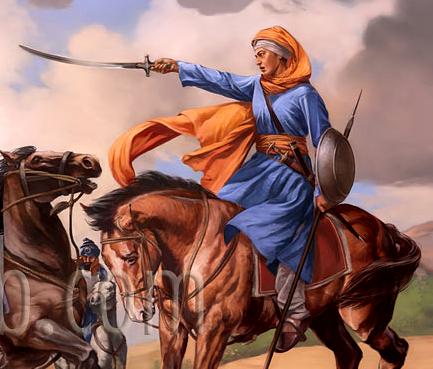
In my most simplistic way of looking at Sikhi, I believe that Guru Sahib would not have asked anything of his son that he would not have asked of his daughter. Keep in mind, this is the same Guru who fought alongside Mai Bhago in the Battle of Mukatsar.  And if Sikh men are “expected” to keep their kesh and the rest of the Sikh uniform even prior to taking Amrit – why wouldn’t the same be expected of Sikh women?

How and when did this disparity occur? Is there question over whether Sikh women kept their saroop during the Guru’s times? Is there a debate to be had over whether Sikh women are supposed to keep all their kesh in the first place? Is this simply the result of Western, Punjabi, or other cultural influences on our identity?

Or is this just a matter of us everyday Sikhs needing to re-align our perception of beauty to that of the Guru’s?

I don’t claim to know the answers, but I do feel the discussion needs to emerge from the isolated camp dorm rooms and be brought out in the open.

In my conversations with women who keep their Sikhi saroop or wear Dastaars, I’m alarmed to find that many receive more support from non-Sikh friends and instead have been discouraged by their Sikh peers and elders.

Truth is…this isn’t really just about kesh

It is about the rigid gender discrimination within the Sikh community.

It is about our inability to create an effective support structure for young women in the same way we do with young boys.

This to me is not a trivial matter. As the Chinese proverb goes, women hold up the “half the sky“, and I believe that Sikh women – our daughters, sisters, mothers, grand-mothers, and great-grand-mothers – hold up half the panth.

And if we as a community are unable to support and encourage Sikh women who choose to make commitments toward the Guru – then we as a community have a lot of self-reflecting to do.

I believe through baani Guru Sahib has given us the ability to empower ourselves, so I implore these women, who adorn the Guru’s uniform not to feel discouraged, but instead see themselves as torchbearers, reviving Sikh tradition in the footsteps of Mata Sahib Kaur.

That said, I also believe that Guru Sahib has designed the saadh sangat with the sole purpose of uplifting one another along this path…and help carry us through difficult times. Where is the saadh sangat now?

At the end of this particular camp, during the final deevan…the staff recognized two boys who recently started keeping their kesh. As they walked up to the stage, showered with jakaaray – I couldn’t help but get a bit choked up. I’ve always admired these brave Sikhs who fall in love with the Guru, and want to embrace his image. And immediately after, a staff member announced that one of the girls, who chose to remain anonymous, also decided to become “Saabat Soorat“, a term I have never heard before referring to a girl. This is the first time I witnessed a young woman being recognized for keeping all her kesh, and I was particularly proud of how quickly the jakaaray filled the air yet again…led completely by the boys.

Perhaps that inspiring moment was only symbolic, who knows if it actually leads to change…

But given where we are as a community…even this is progress.

Inni Kaur’s Journey With The Gurus

JOURNEY WITH THE GURUS, by Inni Kaur. Illustrated by Pardeep Singh, Edited by Manjyot Kaur. Sikh Educational & Cultural Foundation, Norwalk, CT, U.S.A., 2010. Fulll-page color illustrations, hardover, pp 172, $28.95. ISBN # 978-0-9827224-0-4.

REVIEW

I’ve always been a history buff…a Sikh history buff, that is!

I would take every opportunity I could to listen to a saakhi about our rich history. But as a child growing up in the US, I rarely found books that could truly reflect the wonder and beauty of the Gurus’ lives. The history books I read were published in the early 70’s, and although now I can appreciate what hard work it must have taken to translate Sikh history for children into a foreign language – at the time, I had no interest in reading these books. The stories were hard to understand, the dialogue seemed unrealistic, and for whatever reason…they didn’t speak to me.

Inni Kaur’s Journey with the Gurus is a series of short stories about Guru Nanak’s life, followed by discussion points where the author suggests ideas and principles to emphasize while reading with your child.

I’ve been blessed with an opportunity to preview Journey with the Gurus along with my family, and I can say for all of us…this is a book that speaks to us!

It only took me a couple of stories for me to notice what was different about this book. Although the major events in these short stories have been told for centuries, the author however transports us to the time of the Guru, and lets us into the dialogue in between these events, as though we were sitting as witnesses, watching history unfold.

For example, we all know the saakhi where young Nanak refused to wear the Hindu janeu – a string band worn diagonally by Brahmins from the shoulder down – but what was going through his mind that morning while family and friends were gathering for the event to initiate him into the janeu?

We know the saakhi of Guru Nanak’s disappearance for three days in the River Bein, but what were the locals thinking during those three days? How did Bebe Nanaki feel? Where did Bhai Mardana think his friend had gone?

And what was the mood like that early morning when Guru Sahib and Bhai Mardana left for their first udaasi (great journey)?

Journey with the Gurus takes us there and let’s us experience history.

These stories introduce me to personalities I had heard of but never fully appreciated – the chief of Talwandi, Rai Bular; the Governor of Sultanpur, Nawab Daulat Khan Lodhi; and the close friendship Guru Nanak had with his brother-in-law, Jairam.

But of all these relationships, it was the one with his older sister, Bebe Nanaki, that I connected with the most. I’ve always heard that Guru Sahib and Bebe Nanaki were very close and she was a supporting and loving sister. And as per tradition, she is proudly known as the first Sikh of the Guru, but as much as she was an influence in his life, very little is written about her.

Journey with the Gurus does justice to this very special relationship by including her throughout the entire book. I especially enjoyed the dialogue they shared shortly after Guru Sahib came to stay with Nanaki and Jairam in Sultanpur, reminiscing about their childhood:

“Vir, do you remember the hopscotch game we always played?”
“Hopscotch game?” asked Jairam.
“Bhraa ji, you don’t want to know all the things that she made me do. And to top it off, she always won at hopscotch,” said Nanak, laughing and shaking his head.

In another conversation, Nanaki expresses concern over Guru Sahib going to the river by himself early in the mornings. After Jairam kindly suggests that Nanak should decide these things for himself, she replies:

“Yes, dearest, you are right. I sometimes forget that my little brother is all grown up now.”

It was amazing to hear Guru Sahib and Bebe Nanaki interact in a way that a younger brother and protective older sister typically would…something so many of us can relate to.

There were some other subtle messages I found quite powerful. Like when Lakhmi Das was born, Guru Nanak and Mata Sulakhani ji’s second child, the author mentions how “Sulakhani’s parents came as quickly as they could to see their new grandson.” And how Mehta Kalu ji speaks so gently about his daughter-in-law, referring to her as a “kind and loving wife”, and Mata Tripta ji chiming in: “I am so glad to see that Sulakhani is looking after her children very well.”

I found the tone of these conversations refreshing and quite different from what I’ve read before or would have expected, given the cultural norms of the time.

Some may feel that Inni Kaur has taken some creative liberty with these stories, and may ask, “How do we know this all really happened?” To that, my response would be, “How do we know it did not?”

The major events in the stories have been retold in a creative way in modern language, but the facts as we traditionally know them are still intact. As for all the dialogue in between, I wonder why wouldn’t Guru Sahib and Bebe Nanaki converse like any other brother and sister would? Why wouldn’t Jairam facilitate Guru Sahib’s move to Sultanpur to help his in-laws out, and re-unite his wife with her brother? And why wouldn’t Mehta Kalu ji and Mata Tripta ji admire their daughter-in-law for being a good wife and mother?

I mean…Guru Sahib was such a progressive thinker and way ahead of his time; he preached equality, kindness, compassion – and influenced the masses by doing so – why couldn’t such conversations take place?

Reading such a different perspective to these saakhis is like reading Sikh history for the first time. I’m glad to see the book is labeled “Volume One”, because I can’t wait to read the discourse between Guru Nanak and Bhai Lehna, or the conversations between Bhai Gurdas and Guru Arjan on the bank of Ramsar while scribing the Guru Granth Sahib.

And, of course, the precious dialogue between Mata Gujri ji and her four grandsons.

What I appreciate most about this book is how engaged our children were while reading it – whether it was the beautiful illustrations that kept our little ones sneaking a peek into the next page or the discussions we had afterwards that would go on past bedtime.

It was that little personal connection they created with Guru Nanak that I found so special.

And for that, I am truly grateful.

Thank you, Inni Kaur, for introducing us to the simple unfolding of our beautiful history. My children and I hungrily look forward to the next volume so we can continue our Journey with the Gurus…

Watch the Homepage of sikhchic.com for the book-launch on October 15, 2010.


Who Am I?

This summer at a local gurmat camp, I ran a workshop called “Who Am I?”

It consists of a role-playing exercise where I play the ignorant passerby asking the kids about who they are and what Sikhi is all about. The goal of this workshop is to come up with our own “elevator pitch” – concise yet thoughtful answers to some of the most common questions we’re asked.

No matter how many times I’ve facilitated this workshop, I’m always amazed at how little the campers are able to answer about very basic questions on Sikhi and Sikh practices. It doesn’t even matter what kind of camp – from those that follow the Rehat Maryada closely to those who do not – the results are much the same.

In one camp, when the kids were being particularly unresponsive, I veered off my lesson plan of “How we explain our Sikhi to Non-Sikhs“, and instead started asking the group of 15-17 years olds about themselves.

What kept them as Sikhs?
What made them want to follow the Guru’s path?
Why did they keep their Kesh and Sikhi identity?

Surprisingly, there were still few answers. In every group, there’s always one or two who raise their hands and say all the “right things” and perhaps one or two brave souls who object and say, for example, that keeping their kesh is no longer necessary, and, for that matter, neither is organized religion.  Even this perspective I respect because at least they are thinking, reasoning, and vocalizing their opinions. I’m not really concerned about either end of this spectrum, but what does worry me is the vast majority in the middle who appear to be, well…indifferent.

Out of a little frustration, I finally picked one kid in the back – a fifteen year old boy wearing a patka and asked him directly: “Tell me, why do you keep your kesh?”

After a short pause, he looked back at me and said, “To be honest, I really have no idea.”

I feel my parent’s generation did the best they could raising Sikh youth in a land and culture different than their own. As a child growing up on the East Coast of the U.S., I was blessed with opportunities to go to Sikh camps. I loved going to camp and being around people who looked like me and shared my struggles. I have fond memories of gathering around the camp fire with all my friends and shouting jakaaray until we lost our voices – I was inspired…but I’m not sure why.

I grew up participating in kirtan competitions, speech competitions, paatth competitions, and I constantly had the company of Sikh friends, but even in all this…there was still something missing.

Sometimes I look back at all the people I competed with in kirtan competitions, and those who shouted jakaaray along with me at camp…most of them aren’t Sikhs anymore. Perhaps they felt something missing too.

As many of us grow out of adolescence – start to think for ourselves and get exposed to ideas, opinions, and thoughts that we never knew existed – our beliefs get challenged, and it takes a little more than jakaaray and first place trophies to keep us rooted in our Sikhi. Much of that external stuff eventually fades away, and we’re forced to look within.

Although the cause of our current state is still a bit elusive to me, the solution however, is crystal clear. Whereas my training in Sikhi was largely external – keep your kesh, be proud of your history, and one day you may grow up into a Sikh who reads and reflects on gurbani – essentially, growing Sikhi “outside-in.”

I believe the answer is to start with bani – day one, and grow Sikhi “inside out.”

I’m convinced that fostering a gurbani-based environment at our camps, Khalsa schools, Sikh Student Associations, and, most importantly, our homes, is the best way to engage with the next generation of Sikhs, so that they can individually and collectively create connections with the Guru.

So maybe this means that the SSA substitutes one if it’s monthly meetings for Gurbani Vichaar, or our camps and Khalsa schools build their lesson plans on reflective exercises around a shabad, and perhaps as we put our sons and daughters to bed every night, we help them find strength and courage in a shabad in the same way they do with a saakhi.

By cultivating that inner relationship with the Guru – through shabad, simran and reflection – I believe the external aspects of Sikhi will fall into place. We will then always be fulfilled and our questions will always be answered.

A friend once said to me, if we want to see our reflection in the lake, the water must first be still.

May Guru Sahib bring that stillness in our lives, so that we can realize who we really are.


Good PR

Many years ago, I attended a demonstration where thousands of Sikhs gathered in the city. Onlookers were curious as to who we were and why we had gathered. As I was handing out information pamphlets, a passerby approached me, took one of the pamphlets, quickly looked it over and in a thick British accent said, “Ah yes…Sikhs! Wonderful religion…wonderful people…brave soldiers…” Then he leaned over to whisper something in my ear and said “…but whoever handles your public relations sucks!”

As I see patterns and trends on the way Sikhs are portrayed in the media, that incident always comes to mind. Seeing how positive acts from Sikh individuals rarely mention the word “Sikh” yet negative acts from Sikh individuals turn in to an “exposé” of our community, I started to wonder how non-Sikhs were learning about us and what can we do to proactively present a more accurate image.

Here in North America, our approach to public relations and education is largely reactionary. After a violent event at a Gurdwara, we explain to the public how Sikhs are not violent. After September 11th, we explained how we’re not terrorists. It seems we spend more time explaining who we’re not rather than who we are.

There are some positive efforts as well. Traditionally, many Sikh communities flood the interfaith networks as a means of outreach. I’ve participated in many interfaith events over the years, and although it may be beneficial for relationship building and dialogue, its impact on educating large parts of society over time is debatable.

In the past few months, somewhere in the plethora of press release emails I receive from Sikh organizations, I learned of two significant initiatives by the Sikh Coalition that seemed to pass quietly without much fanfare.

On May 21, the Texas Board of Education voted to include information on Sikhs and Sikh practices in the state-mandated curriculum for public school students. This is the first time Sikhs or Sikhi has ever before been included in a state-wide curriculum. Convincing a fairly conservative state like Texas to incorporate Sikhs in to their curriculum is an impressive feat in itself, but even more encouraging is how influential Texas is for textbook manufacturers. The Sikh Coalition press release states:

Experts estimate that the decisions made by the Texas Board of Education affect the textbooks used in 46 other states because it is one of the largest purchasers of textbooks in the nation.

This accomplishment shows that by being proactive and working at a grassroots level to mobilize the local community, establish strategic partnerships, take a professional and systematic approach, and patiently work through the process – people will listen and policies will change. This is a major achievement – what better way to educate people on Sikhs and Sikhi than through the school system?

Another impressive initiative is the Sikh Coalition Presenter’s Course that was launched this past February in New York City. After a rigorous application and interview process, 15 students are selected to participate in an intensive 3 day training course led by a public speaking expert and Sikh Coalition staff members. Those who complete the course and pass their evaluation become certified Sikh Coalition presenters. In addition to public speaking skills, presenters are trained to deliver a standard presentation on Sikhi that has been reviewed, discussed, and vetted at length. Certified presenters must make 2 public presentations a year to maintain their credential and are regularly provided updates as materials are revised. Rather than re-inventing the wheel every time a presentation is needed, now one community can have several resources prepared with a standard presentation and consistent message. Imagine having 15 people in your community who can respond to any incident at a school or workplace with such a presentation, or better yet, proactively seek out opportunities to educate! Check out the YouTube video to learn more about the course. Other cities have already inquired on how the presenter’s course can be brought to their community.

You might ask – why is education so important? Sikhs have settled here for over a hundred years with our identity intact, Sikhs have been elected to public office and hold senior corporate positions, why waste the resources? Or as some commenters have challenged me in previous posts, “who cares what the goray think of us?” That attitude might be okay for some people…not for me.

As long as Sikh passengers are being profiled, Sikh kids are being bullied, and Sikh taxi drivers are being attacked…then we have a job to do. And even then, I don’t want my children and grandchildren to simply “settle” here in the US and still be looked at as foreigners. I want Sikhs to have a voice and be recognized as the law-abiding citizens and the community activists we are. I’d like us to be viewed as a powerful and influential community who must have a “seat at the table” in policy decisions. Unless people know who we are, what we’re about, and what we stand for, how can we expect to be heard and have our issues addressed? All of this requires us to shift our paradigm when it comes to education and congratulations to the Sikh Coalition for taking the lead and being proactive!

Now what can you do? In addition to bringing the presenter’s course to your community, what changes can you make at your local Gurdwara? Gurdwaras are still a good place for education and outreach. What about the creating a “Welcoming Committee” that prepares materials for non-Sikh visitors, facilitates organized tours, and perhaps invites community groups and neighbors to visit the Gurdwara? What if this committee organized charity or social events for their local surrounding community to participate in? Anybody have any other tangible ideas to share?